
 简体中文版
简体中文版

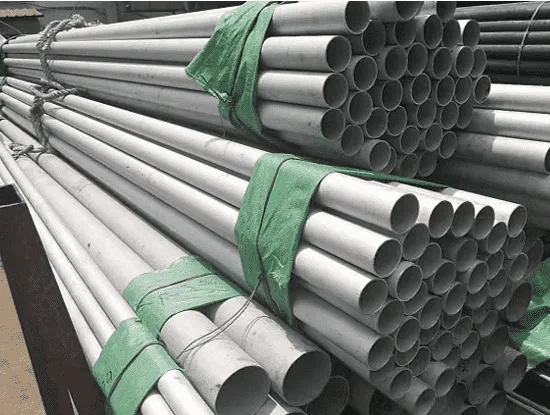
Stainless steel seamless pipes are widely used in various industries due to their high strength, corrosion resistance, and resistance to extreme environments. Unlike welded pipes, seamless pipes have no weld seams, making them more reliable in high-pressure applications.
Common grades of stainless steel seamless
pipes include:
304/304L – Good
corrosion resistance and versatility.
316/316L – Excellent resistance to chemical and salt water corrosion.
321/347 – Suitable
for high-temperature applications.
Duplex stainless steel – High strength and excellent corrosion resistance.
304 stainless steel seamless pipe is a
high-quality, highly corrosion-resistant metal pipe material widely used in
petroleum, chemical, food, pharmaceutical, and aerospace industries. Its
manufacturing process mainly includes smelting, rolling, piercing,
straightening, and cutting. The production processes for these steps are
described in detail below.
Smelting is the first step in the
production of 304 stainless steel seamless pipe. Its purpose is to melt the raw
materials into molten steel with a specific composition and temperature. The
specific steps are as follows:
Select suitable 304 stainless steel raw
materials and inspect and clean them.
Add the raw materials to a smelting
furnace, heat to the melting point, and maintain for a certain time to fully
melt the raw materials into molten steel.
Add appropriate alloying elements according
to product standards and customer requirements to adjust the composition of the
molten steel.
Pour the molten steel into an ingot mold to
form an ingot of a specific shape and size.
Rolling is one of the important steps in
processing steel ingots into seamless 304 stainless steel pipes. The specific
steps are as follows:
Place the steel ingot in a heating furnace
and heat it to a certain temperature to increase its plasticity and reduce its
resistance to deformation.
Send the heated steel ingot into a rolling
mill, and through multiple rolling passes, gradually reduce the pipe diameter
and increase the pipe length.
The rolled tube is straightened using a
straightening machine to relieve stress and improve straightness.
The straightened tube is then allowed to
cool naturally or by forced cooling to lower its temperature and increase its
strength.
Piercing is a crucial step in processing a
solid tube blank into a hollow tube. The specific steps are as follows:
A suitable 304 stainless steel solid tube
blank is selected and inspected and cleaned.
The tube blank is fed into a piercing mill,
where the rotating and advancing piercing cutter pierces the blank into a
hollow tube.
The pierced tube is straightened using a
straightening machine to relieve stress and improve straightness.
The straightened tube is then allowed to
cool naturally or by forced cooling to lower its temperature and increase its
strength.
Straightening is an essential step in the
production of 304 stainless steel seamless pipes. Its purpose is to make the
pipes straight and aesthetically pleasing, and to eliminate stress. The
specific steps are as follows:
Select the 304 stainless steel seamless
pipes to be straightened and inspect and clean them.
Feed the pipes into the straightening
machine. Through the rotation of the straightening rollers and the application
of pressure, the pipes gradually become straight.
Inspect the straightened pipes to ensure
they meet product standards and customer requirements.
Allow the qualified pipes to cool naturally
or by force to lower their temperature and increase their strength.
Cutting is the final step in the production
of 304 stainless steel seamless pipes. Its purpose is to cut the pipes into
finished products of specified lengths. The specific steps are as follows:
Select appropriate cutting tools, such as
plasma cutters, laser cutters, etc.
Feed the pipe into the cutting machine and
cut it according to product standards and customer requirements.
Inspect the cut finished product to ensure
it meets product standards and customer requirements.
Package the qualified finished product to
protect its surface quality and prevent damage during transportation.
The above is the production process of 304
stainless steel seamless pipe. Each step has its specific requirements and
operating procedures. Only by strictly following these requirements can
high-quality 304 stainless steel seamless pipe be produced.

Address:1177 Huanhu Road, Yuelu District, Changsha, Hunan, China
 WhatsApp
 WeChat