
 简体中文版
简体中文版

Epoxy coating has become an important solution for pipe corrosion protection, repair, and extended service life. It is suitable for various pipe materials, including steel pipes, concrete pipes, and PVC pipes, and is widely used in industrial, residential, and commercial buildings, as well as drinking water, chemical, and gas pipeline systems. This article will provide a comprehensive analysis of the types, advantages, disadvantages, lifespan, and application scenarios of epoxy coatings.
This coating is highly praised for its ease
of application on both new and old concrete floors. It can fill any cracks or
imperfections and seamlessly level the surface, creating a smooth and
aesthetically pleasing finish.
This epoxy is popular in high-traffic
commercial settings due to its excellent mechanical strength. It is
particularly advantageous for industries that handle liquids, such as food
processing plants, as it also provides anti-slip properties.
Mortar epoxy boasts the highest strength of
all epoxy applications. This coating is commonly used in commercial settings
with industrial equipment and can be used to repair cracks or imperfections
before installing other epoxy flooring.
Gravel epoxy is popular for its strong
decorative properties and can be easily customized to add company-specific
logos and decorative details.
Terrain is commonly used in large spaces
such as commercial buildings, schools, and offices, and is popular for its
durability, aesthetics, and ease of cleaning.
Antistatic epoxy is commonly used in
locations housing static-sensitive electronic equipment and is a popular choice
in laboratories, hospitals, and electrical equipment manufacturing plants.
Moisture barrier epoxy coatings are
typically applied directly to concrete, reducing vapor emissions to near zero
and often serving as a base for other applications such as vinyl, carpet, tile,
hardwood, etc.
Quartz epoxy is a mixture of epoxy polymer
resin and dyed quartz particles, most commonly used for flooring requiring a
combination of decorative, hygienic, and slip-resistant properties.
Flake epoxy is a decorative epoxy where
thin flakes or chips of various colors are added while the epoxy is still wet
to create a specific final effect.
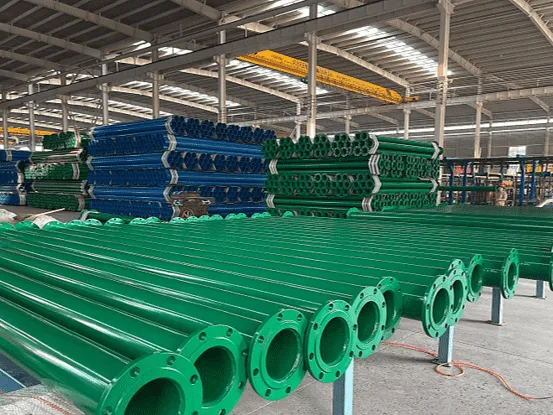
Epoxy coating processes offer numerous
advantages, some of which are listed below:
Avoids replacing the entire piping system,
saving material and labor costs.
Especially effective for lightly to
moderately corroded pipes, quickly restoring pipe function.
Non-invasive application, no need to remove
the original pipes, allowing for rapid completion of the lining coating.
Suitable for emergency pipe repairs or
upgrades.
Can withstand liquid pressures up to 1000
PSI.
Protects against acids, alkalis, and most
chemical media.
NSF (National Sanitation Foundation)
certified, suitable for drinking water pipes.
The coating does not release harmful
chemicals, making it safe to use.
The smooth lining reduces the risk of
deposit buildup and scaling.
Improves pipe flow efficiency.
Epoxy coatings have many advantages, but
this process also has some disadvantages. Details are as follows:
The main risk of epoxy coatings is
delamination; this means that after coating the upper surface of the pipe,
deterioration may occur inside the pipe.
Covering damaged or corroded epoxy coatings
reduces the inner diameter of the pipe, leading to clogs.
A reduced inner diameter reduces the
surface area for liquid flow, thus lowering pressure.
Once an epoxy coating is damaged, there is
almost no possibility of repair.
The thin lining is one of the main
disadvantages of using epoxy coatings to address leaks and rust problems.
Coating pipes with epoxy increases the risk
of corrosion because damaged cracks can become entry points for moisture to
seep into the steel pipe and accelerate corrosion.
Epoxy coatings are not suitable for all
types of pipes.
Steel and clay pipes can be repaired with
epoxy coatings, but many other types of pipes are more fragile and cannot be
repaired with epoxy coatings.
Epoxy coatings pose specific health hazards
because joints can become contaminated.
The lifespan of an epoxy coating is
affected by several factors. The coating thickness is approximately 2 mm, but
the specific thickness depends on the pipe size. The average lifespan of an
epoxy coating depends on the materials used during application, the sealing of
all leak points, and the application environment.
Standard Lifespan: Approximately 30-50
years;
Regular Maintenance: Inspection and
localized repairs every 10 years can extend the lifespan;
Theoretical Maximum Lifespan: With proper
maintenance, the coating can remain in good condition for 100 years.
Epoxy coating is an economical, efficient,
durable, and environmentally friendly pipe protection solution. It is suitable
for a variety of pipe materials, extending pipe life and reducing blockages and
corrosion. However, strict application standards and regular maintenance are
essential; otherwise, problems such as delamination or reduced inner diameter
may occur. Overall, epoxy coating is a worthwhile solution for building and
industrial projects that seek to extend pipe life while controlling costs.

Address:1177 Huanhu Road, Yuelu District, Changsha, Hunan, China
 WhatsApp
 WeChat