
 简体中文版
简体中文版

ASTM A53 is one of the most widely used steel pipe standards in the North American market, widely used for fluid transport, structural, and mechanical applications under low to medium pressure and temperature conditions.
Depending on the manufacturing process, ASTM A53 is mainly divided into seamless pipe (Type S), ERW pipe (Type E, ERW), and furnace welded pipe (Type F), with Type S and Type E being the most common choices. So what are the differences between ASTM A53 ERW pipe and seamless pipe?
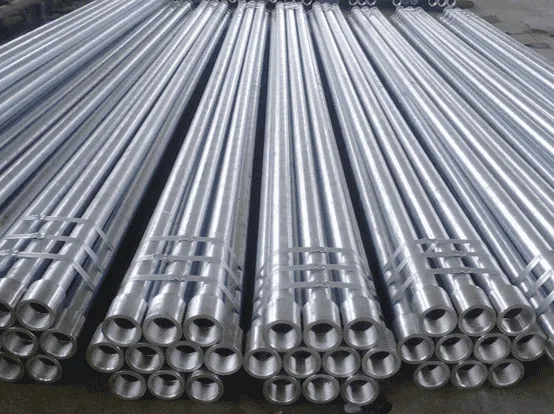
Includes black pipe and hot-dip galvanized pipe; seamless pipe (Type S), resistance welded (ERW) pipe (Type E), and continuous furnace welded pipe (Type F). The most commonly used types are Type S and Type E. Sizes range from NPS 1/8 to 26.
Mechanical and pressure piping; also suitable for steam, water, gas, and air piping. Pipes can be welded, coiled, bent, and flanged.
Grade A: Yield strength approximately 205 MPa, tensile strength approximately 330 MPa;
Grade B: Yield strength approximately 240 MPa, tensile strength approximately 415 MPa (more commonly used).
|
Type S |
Type E |
Type F |
|||
|
(seamless) |
(electric- |
(furnace- |
|||
|
Grade A |
Grade B |
Grade A |
Grade B |
Grade A |
|
|
Carbon max. % |
0.25 |
0.30* |
0.25 |
0.30* |
0.3 |
|
Manganese % |
0.95 |
1.2 |
0.95 |
1.2 |
1.2 |
|
Phosphorous, max. % |
0.05 |
0.05 |
0.05 |
0.05 |
0.05 |
|
Sulfur, max. % |
0.045 |
0.045 |
0.045 |
0.045 |
0.045 |
|
Copper, max.% |
0.40 |
0.40 |
0.40 |
0.40 |
0.4 |
|
Nickel, max. % |
0.40 |
0.40 |
0.40 |
0.40 |
0.4 |
|
Chromium, max. % |
0.40 |
0.40 |
0.40 |
0.40 |
0.4 |
|
Molybdenum, max. % |
0.15 |
0.15 |
0.15 |
0.15 |
0.15 |
|
Vanadium, max. % |
0.08 |
0.08 |
0.08 |
0.08 |
0.08 |
Size System: Nominal Pipe Diameter (NPS), ranging from NPS 1/8 to 26. Common wall thicknesses are Schedule 10/40/80.
End Types: Plain (PE), Threaded (NPT), or Grooved (for matching system components), selected according to project requirements.
Hydraulic Testing: Each pipe must undergo a hydrostatic test for at least 5 seconds; typical upper pressure limits (example): ≤2500 psi for pipes with a nominal diameter ≤3 inches; ≤2800 psi for pipes with a nominal diameter >3 inches (manufacturers may set higher upper limits voluntarily).
Non-Destructive Electrical Testing (NDE): Welds on each Type E pipe must be tested individually as an alternative to or supplement to the hydrostatic test (specific requirements are detailed in the procurement documents).
ERW Pipes: Welded from coiled steel using longitudinal resistance welding (ERW) process; for A53 Grade B steel pipes, the weld seam requires heat treatment at ≥540℃ to eliminate untempered martensite.
Seamless Pipes: Formed from punched round steel billets using hot rolling process; cold finishing is performed when necessary to improve precision.
ERW Pipes: NPS 1/8 – 26
Seamless Pipes: NPS 1/8 – 26
ERW Pipes: Grade A/B (same as Type S steel)
Seamless Pipes: Grade A/B
ERW Pipes: Hydrostatic testing or non-destructive testing (NDE); special requirements apply to the weld seam.
Seamless Pipes: Hydrostatic testing or non-destructive testing (NDE). Focus on overall substrate quality
ERW Pipe: Good (larger bending radius R, better stability)
Seamless Pipe: Excellent (no weld seams, more suitable for demanding bending applications)
ERW Pipe: Modern ERW pipes have stable weld quality; some high-purity media require verification.
Seamless Pipe: Excellent (no weld seams)
ERW Pipe: More affordable (due to the use of coiled steel and continuous production)
Seamless Pipe: Relatively expensive
ERW Pipe: Fire protection, HVAC, water supply and drainage, general pressure piping, structural components
Seamless Pipe: High-temperature/high-pressure transition sections, critical elbows/coiled sections, media piping sensitive to weld seams
Note: The minimum welding heat treatment temperature for A53 E type B grade steel is 1000 °F (≈540 °C); inspection is permitted by hydrostatic testing or non-destructive testing (NDE).
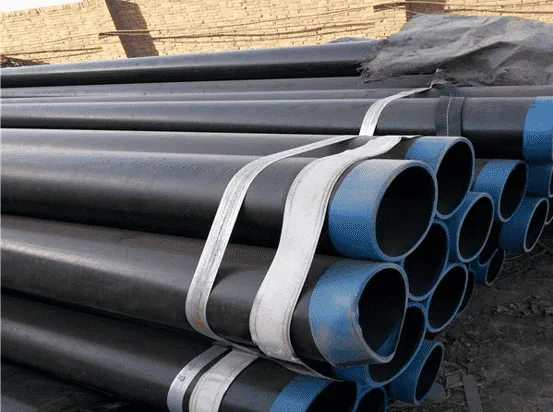
Priority: A53 E/B grade steel pipe. It meets pressure and corrosion resistance requirements, while offering short delivery times and cost-effectiveness. Choose 40/80 gauge and pair it with a galvanized or coated system.
Priority: S-type seamless pipe, as it offers better control over springback and stress distribution during bending.
Priority: Seamless pipe or a higher standard (e.g., ASTM A106/alloy steel) should be used, and its compliance with process requirements should be verified.

Address:1177 Huanhu Road, Yuelu District, Changsha, Hunan, China
 WhatsApp
 WeChat