
 简体中文版
简体中文版

In the construction, manufacturing, and heavy industry sectors, choosing the appropriate steel plate thickness is crucial. Steel plates that are too thin can lead to structural failure, while those that are too thick increase costs and complicate processing.
This guide provides a professional comparison of steel plate thicknesses from 1/4 inch (6.35 mm) to 12 inches (304.8 mm), along with material standards, weight calculation methods, and industry applications, suitable for engineers, purchasing personnel, and manufacturing companies.
Below is a concise reference table of steel plate thicknesses, listing typical thicknesses, international material standards, and common applications.
|
Thickness |
Typical Materials |
Approximate Applications |
|
1/4″ |
ASTM A36 (General Structure), Q235B |
Base plates, light structural parts |
|
1/2″ |
ASTM A36, ASTM A572, Q345B |
Bridges, medium-strength structural elements |
|
1″ |
ASTM A516 (Pressure Vessels), ASTM A36 |
Heavy machinery, shipbuilding, energy projects |
|
2″ |
ASTM A516 Gr70, ASTM A572, API 5L |
Oil & gas pipelines, offshore platforms, pressure vessels |
|
4″ |
ASTM A514, Q460 High-Strength |
Crane base plates, hydropower projects, high-rise cores |
|
6″ |
ASTM A514, ASTM A709 |
Nuclear power plant structures, bridge piers |
|
8″ |
ASTM A517, High-Strength Alloy Plate |
Large-scale turbines, dam reinforcement |
|
10″ |
Custom-Made (A514 / Alloy Grades) |
Specialized engineering, heavy mold bases |
|
12″ |
Custom Rolling (Alloy Steel) |
Industrial presses, offshore deep-water structures |
Note:
Steel plates thicker than 4″, 6″, and 8″ are typically custom-rolled. The greater the thickness, the higher the requirements for the rolling mill's capabilities (maximum thickness, maximum width, and furnace capacity).
Many engineers use both imperial and metric units.
The following steel plate thickness (mm) conversion table provides a quick reference:
|
Inch |
Millimeter (mm) |
|
1/8″ |
3.18 mm |
|
1/4″ |
6.35 mm |
|
3/8″ |
9.53 mm |
|
1/2″ |
12.7 mm |
|
3/4″ |
19.05 mm |
|
1″ |
25.4 mm |
|
1.5″ |
38.1 mm |
|
2″ |
50.8 mm |
|
4″ |
101.6 mm |
|
6″ |
152.4 mm |
|
8″ |
203.2 mm |
|
10″ |
254 mm |
|
12″ |
304.8 mm |
The weight of a steel plate can be calculated using the following simple formula (weight values are based on the density of steel ≈ 7,850 kg/m³):
Weight (kg) = Length (m) × Width (m) × Thickness (m) × Density (kg/m³).
Calculation Example: Weight of a 1″ × 4ft × 8ft Steel Plate
Thickness: 1″ = 25.4 mm = 0.0254 m
Dimensions: 4 ft = 1.22 m, 8 ft = 2.44 m
Weight = 1.22 × 2.44 × 0.0254 × 7850 ≈ 610 kg (≈ 1340 lbs)
Commonly used in building structures, flooring, and general manufacturing.
1/4″ steel plates are commonly used for flooring.
1/2″ steel plates are suitable for load-bearing beams and frames.
Widely used in shipbuilding, energy, and oil and gas industries.
1″ steel plates are commonly used for storage tanks and bridges.
2″ steel plates provide excellent load-bearing capacity for pressure vessels and offshore platforms.
Thick steel plates are used in critical high-stress environments.
4″ steel plates are commonly used in hydroelectric power plants, cranes, and heavy-duty support foundations.
8″, 10″, and 12″ steel plates belong to the extra-thick steel plate category—typically custom-rolled for offshore structures, presses, and industrial molds.
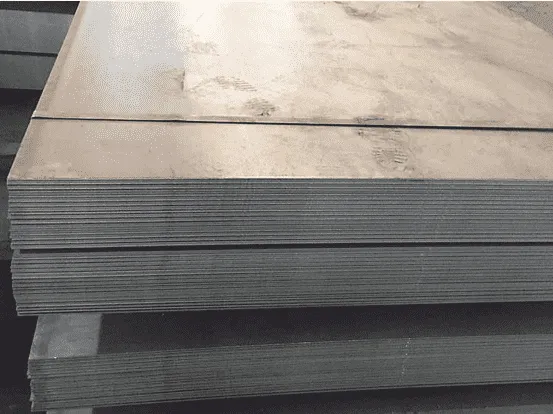
The material you choose directly affects weldability, toughness, and cost.
General Construction: ASTM A36 (Affordable, easy to weld)
Pressure Equipment: ASTM A516 (Good weldability, high impact resistance)
High Strength Requirements: ASTM A572 Gr. 50 or ASTM A514 (Allows thinner and lighter designs)
Weather Resistance: ASTM A588 (Reduces outdoor maintenance)
Thicker steel plates (over 2 inches) may require preheating before welding and the use of specialized cutting tools.
The choice between 1-inch and 2-inch steel plates depends on the design load, weld joint design, and cost optimization.
The price of steel plates increases with thickness and grade.
For example, due to differences in weight and processing costs, 1-inch thick steel plates may be 60-70% cheaper than 2-inch thick steel plates of the same material.
Standard commercial thicknesses are approximately 4″–6″; custom bridge steel and alloy steel can be made to 8″–12″.
A 5mm steel plate has sufficient strength for light to medium-sized structures and mechanical protection, but may be insufficient for heavy-duty or high-stress structures.

Address:1177 Huanhu Road, Yuelu District, Changsha, Hunan, China
 WhatsApp
 WeChat